Here's a small confession from twelve years of measuring bedrooms: almost nobody guesses their wardrobe needs correctly. And the ones who guess wrong nearly always guess low.
Start by counting, not guessing
Before anyone draws anything, take an hour and take stock. Open every cupboard, every suitcase under the bed, every bag on the loft. Sort it into four piles, things that hang, things that fold, things that go in a box, and things that should really have gone years ago.
Then measure the piles. Folded clothes take roughly 300mm of shelf depth. Hanging clothes want 550 to 600mm of depth, because a shoulder is wider than you think. A shirt on a hanger takes about 25mm of rail; a heavy sari or a winter coat takes closer to 50mm. Add it up honestly and you'll have a number, and that number, not a standard drawing, is what should size your wardrobe.
A wardrobe designed around what you own will still be tidy in five years. A wardrobe designed around a standard drawing is full within six months.
How much rail does a family actually need?
As a rough starting point, and assuming a reasonably ordinary wardrobe of clothes:
- One adult, about 1.2m of hanging rail, plus four or five shelves
- A couple, 2.4 to 3m of rail. If one of you keeps saris or sherwanis, add another half metre and a deeper section.
- A child, less rail than you'd think, and far more shelf and drawer. Children's clothes fold; children's things do not.
Split the hanging into two heights if you can. A long section, around 1.5m tall, for saris, kurtas and coats; and a double-hung section, two rails at roughly 1m each, for shirts and trousers. Double-hanging doubles your capacity in the same width, and it's the single cheapest way to gain storage.
Sliding or hinged?
People often ask which is better, and the honest answer is that it depends entirely on your room.
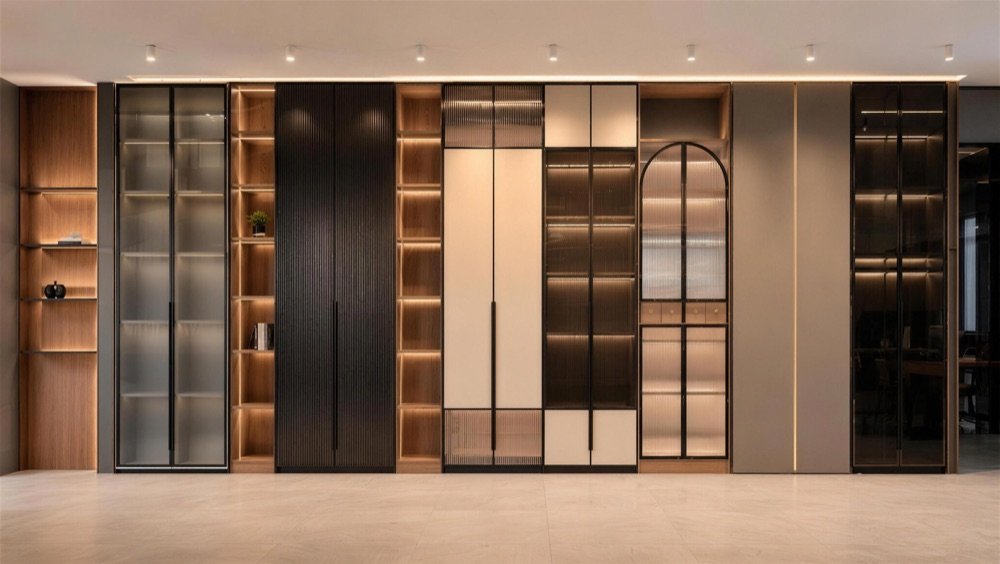
Sliding doors need no clearance in front, so they're the right answer in a small bedroom, or wherever the bed sits close to the wardrobe. The trade-off is that you can only ever see half the wardrobe at once, and the track needs a wipe now and then. They also cost a little more.
Hinged doors open the whole thing to you at once, which is genuinely nicer to live with, and they're kinder on the budget. They just need about 600mm of clear floor in front. If your room can spare it, take it.
And if you have a spare corner or a wide passage, a walk-in doesn't have to be a grand thing. Two runs of open shelving and a curtain will do more for a busy morning than a very expensive door ever will.
The bits inside that earn their keep
- A pull-out trouser rack, saves creases and saves space
- A shallow drawer with dividers, for the small things that otherwise live in a heap
- A lockable drawer, for documents and jewellery, and worth every rupee for the peace of mind
- A loft unit, for suitcases and winter bedding. Give it a separate shutter so you're not disturbing it every day.
- A mirror on the inside of a door, free, in effect, and it saves you a piece of furniture
- A little light inside, a strip on a door sensor costs very little and feels like a luxury every single morning
A word about humidity
This matters more in our climate than most people expect. Leave a gap of 25 to 50mm between the back of the wardrobe and an outside wall so air can move, and don't seal the unit tight to the floor. Put a few ventilation holes in the back panel of any section that holds folded cotton. And if a wall is one that gets damp in the monsoon, tell your designer before the drawing is finalised, there are simple things we can do about it then, and expensive things we have to do about it later.
Plan for the family you'll be, not just the one you are
Children grow. Parents come to stay. Somebody starts working from home. When you're planning, leave one section flexible, adjustable shelves rather than fixed, a rail that can come out, a shutter that could take a different internal layout later. It costs almost nothing at the drawing stage, and it means the wardrobe grows with you instead of quietly becoming wrong.
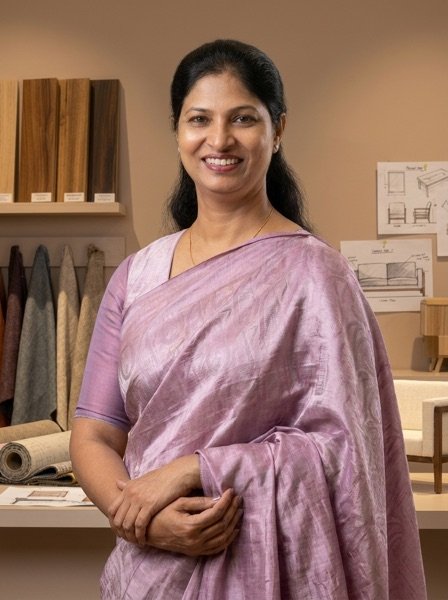
Jenitha started Aarcube in 2014 after building her own home and finding the whole process needlessly complicated. She has been quietly trying to fix that ever since.